
Ambrosia? Spalted?
Most people are familiar with hard maple: a dense, durable hardwood that’s an excellent choice for cutting boards, cabinetry, and fine furniture. It’s strong, reliable, and beautifully consistent. That consistency, however, can also read as a bit… plain. Traditional maple tends to be light in color with a clean, understated grain pattern. If that’s your jam, there’s absolutely nothing wrong with it.
For those who prefer a little more personality in their wood, maple has some compelling alternatives. Several varieties offer added visual interest without sacrificing the qualities that make maple so popular. Figured maple, such as curly or birdseye, is one option and will be the focus of a future blog post. Another pair worth exploring is spalted maple and ambrosia maple.
Both spalted and ambrosia maple feature dark streaks and markings that introduce contrast and character into the wood. While they may look similar at first glance, the causes of these stains and the differences between them are distinct. What creates these markings, and how do the two types compare? I’m glad you asked.
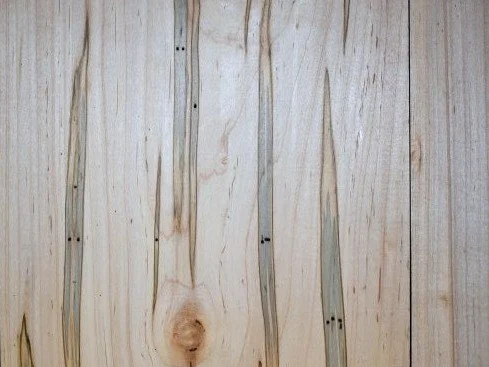
Ambrosia maple, sometimes called wormy maple, is known for its distinctive black streaks that run through the wood. These markings often feature one or more small black pinholes at their center. On some boards, the streaks are subtle and sparse. On others, they can appear in dramatic clusters spread across the entire surface. So what causes these unusual patterns?
The answer lies with the ambrosia beetle. When this beetle burrows into a living tree, it creates the tiny pinholes visible in the wood. Rather than feeding on the wood itself, the beetle introduces and cultivates a fungus inside the tree, which serves as its food source. As the fungus grows, it discolors the surrounding wood, leaving behind the dark streaks that make ambrosia maple so visually striking.
Despite their appearance, these pinholes and stains are purely cosmetic and do not compromise the strength or stability of the wood. While ambrosia markings are most commonly associated with maple, similar patterns can occur in other wood species as well.
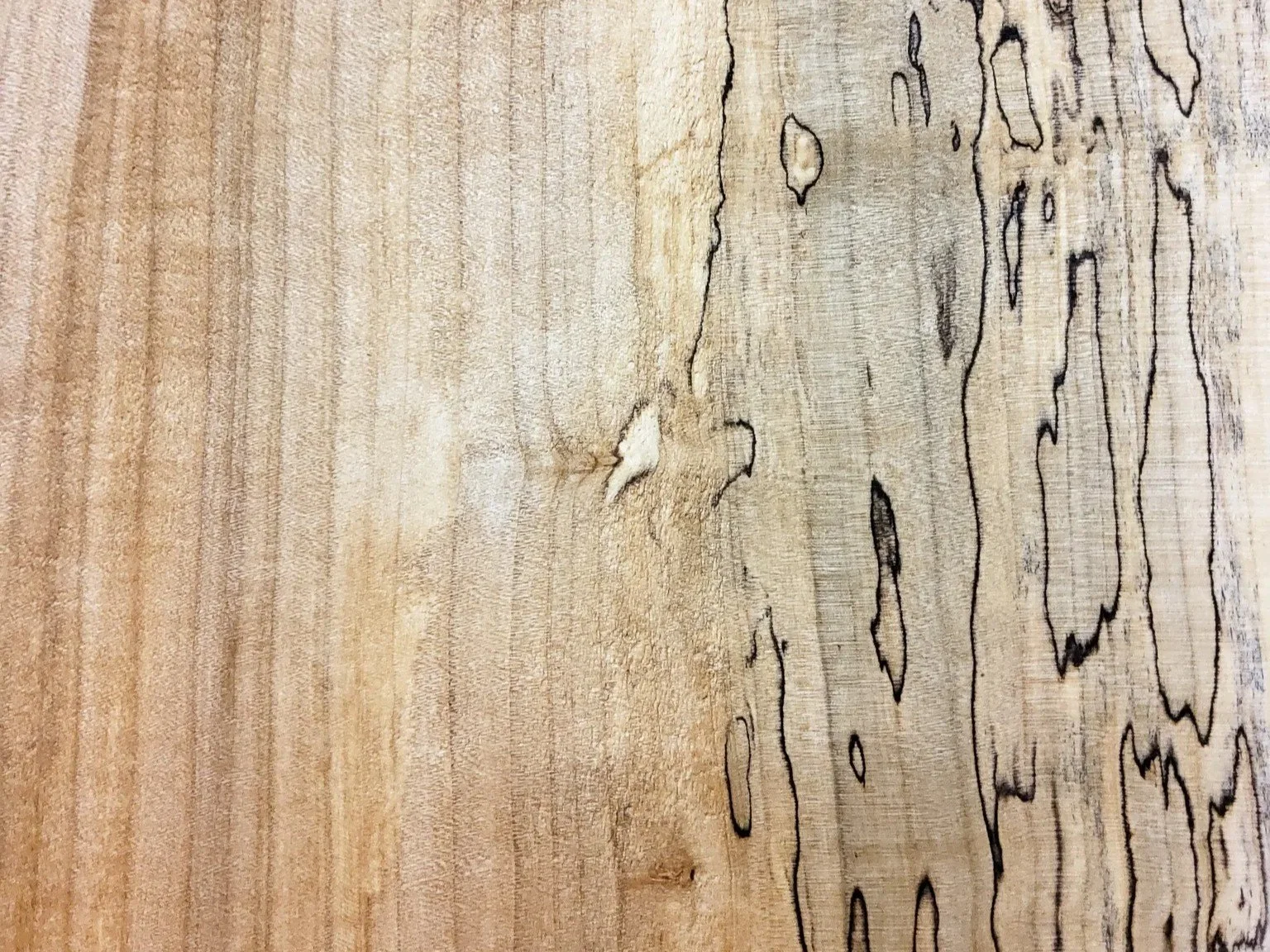
Spalted maple also features black staining, but the markings tend to be more diffuse and irregular, and they lack the pinholes commonly seen in ambrosia maple. The coloration and pattern of spalting can vary widely, ranging from subtle lines to bold, web-like contrasts.
So what exactly is spalting? Unlike ambrosia maple, where staining occurs in a living tree, spalting is the result of fungal activity that begins as the tree starts to decay. As the wood breaks down, the fungus spreads through it, creating the distinctive lines and patches of discoloration. This natural growth pattern is what gives spalted maple its varied and often dramatic appearance.
There is a relatively narrow window in which spalting can be captured without compromising the wood’s integrity. If decay progresses too far, the wood becomes punky, or soft, and is no longer usable. To preserve the material, the sawmill cuts the log into slabs and kiln-dries them. This process halts the decay, locks in the staining, and stabilizes the wood for future use.